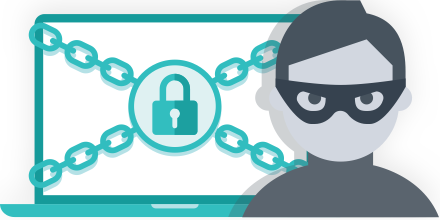
The best way to protect yourself, your users and your business against ransomware is by setting up a proactive defence. The ransomware statistics paint a frightening picture for anyone in charge of IT: In Q3 2016 alone, 18 million new malware samples were captured. Source: Panda Labs What that means is that the criminals…



IT Managers: How to Protect Your Users Against Ransomware
The best way to protect yourself, your users and your business against ransomware is by setting up a proactive defence. The ransomware statistics paint a frightening picture for anyone in charge of IT: In Q3 2016 alone, 18 million new malware samples were captured. Source: Panda Labs What that means is that the criminals…
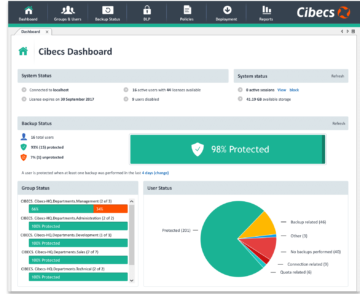
Cibecs Joins Silicon Valley Top 20
Cibecs Joins Silicon Valley Companies to be Listed on Top 20 Most Promising Storage Solution Providers Cibecs, a leading South African endpoint backup, protection and security solution, has been recognised as one of the 20 Most Promising Storage Solutions by CIO Review. The list, compiled by industry insiders, highlights leading global technology providers that offer effective…

4 Signs You Need a New Endpoint Data Backup Solution
With more workers depending on laptops it is more important than ever to ensure that the work protected and stored on those devices is backed up and protected. Forrester Research says that 45% of corporate executives don’t follow policies for data use and handling. Underlining how at risk almost half of a business’s data actually…
All taped out? Tape vs Disk
Business & Opinion
April 19, 2011
Is tape backup still a viable solution?
20 minutes to user data protection
General
April 19, 2011
It only needs to take you 20 minutes to secure user laptop & desktop data with Cibecs data backup and recovery software.
The Great (Data) Trek: Data migration best practice
General
April 19, 2011
Migrating data from old to new hardware, or changing over to a new operating system can be a nightmare in a big organisation. Here’s how to avoid data migration blues.
Kongfused about King III?
Compliance & Risk
April 19, 2011
To many companies, GRC (governance, risk and compliance) is a giant ape scaling the office walls. As technology becomes more pervasive and critical to business success, the hairy creature that is GRC also gains in its complexity. Legislation surrounding various aspects of corporate governance, especially the management of business critical and personal data, further adds…
Cloud NEIN: Why enterprise CIOs do not want their data in the cloud.
In a recent study 49% of CIOs and CFOs listed security fears as the primary barrier to adopting a cloud solution. When it comes to the security of company data and the viability of moving user data into the cloud, Enterprise CIOs it seems are not so enthusiastic.
POPULAR ARTICLES
IT Managers: How to Protect Your Users Against Ransomware
WHITE PAPERS
Discover how easy endpoint data protection can be


Get in touch
SOUTH AFRICA
25 Boschkop Avenue Boskruin, Randburg, Johannesburg, South Africa
AUSTRALIA
9 Tumba Court, Joondalup WA, 6027, Australia
Stay In The Loop
Sign up to receive emails for the latest updates, features, and news:
© 2022 Cibecs International LLC. All Rights Reserved. Privacy Policy